Grill Maintenance & Seasoning
Protect your investment from rust, grease fires, and element degradation.
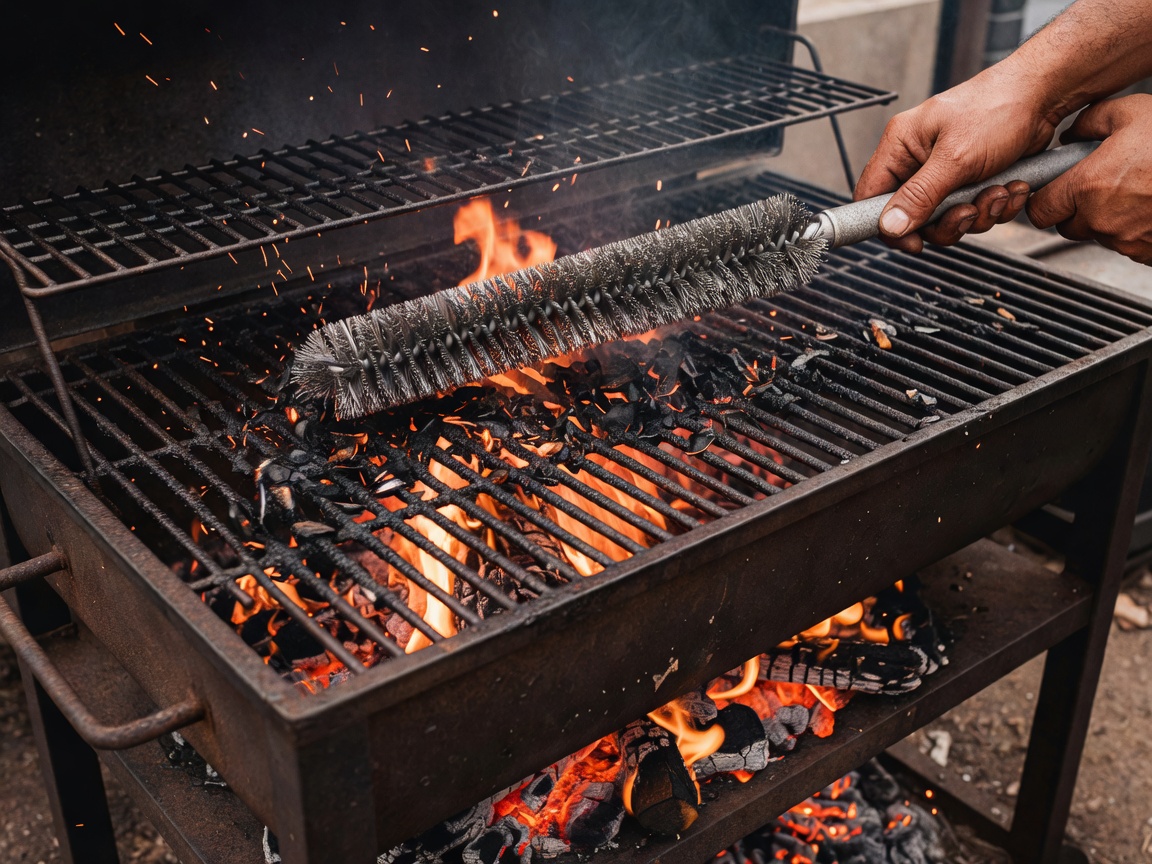
A high-quality grill is a substantial financial investment. Neglecting it leads to uneven heating, foul-tasting food, and eventually, structural failure due to rust. Proper maintenance is not just about aesthetics; it is fundamentally about food safety and performance.
Seasoning Cast Iron Grates
Many premium grills come with raw cast iron grates. They retain heat beautifully but will rust overnight if unprotected. Just like a cast iron skillet, they require "seasoning"—a process where oil is baked onto the iron to create a natural, non-stick polymer coating.
To season new grates: wash them with mild soap and water, dry them completely, and coat them lightly with a high smoke-point oil (like canola or grapeseed). Heat the grill to 400°F and let the grates bake for an hour. The grates will turn dark black. Reapply a light coat of oil after every cook while the grates are still warm.
Managing Ash and Grease
For charcoal grills, ash is the enemy of longevity. Wood and charcoal ash is highly alkaline. When it mixes with ambient humidity or rain, it forms a caustic lye-like paste that rapidly corrodes steel. Always empty your ash catcher after a cook once the coals are fully extinguished.
For gas grills, grease management is critical. A buildup of grease in the drip pan or firebox can ignite, causing violent grease fires that can warp the metal body of the grill and melt plastic components. Check and empty the drip tray regularly, and scrape down the internal firebox walls twice a season.
Deep Cleaning Gas Burners
If your gas grill is struggling to reach high temperatures or the flames are yellow instead of a crisp blue, you likely have clogged burner tubes. Spiders frequently nest inside the venturi tubes during the off-season. Disconnect the gas, remove the burners, and run a flexible venturi brush through the tubes to clear obstructions. This simple maintenance step restores maximum heat output.
Winterizing Your Setup
If you live in a climate with harsh winters and choose not to cook year-round, you must properly store your equipment. Give the grill a deep clean to remove food debris that attracts rodents. Turn off and disconnect propane tanks (store them outdoors, never in an enclosed garage or basement). Coat internal grates with a heavy layer of cooking spray, and cover the unit with a breathable, heavy-duty cover to prevent moisture entrapment.