Smoker Techniques for Perfect Bark
Fire management, fighting the stall, and the secrets to low-and-slow barbecue perfection.
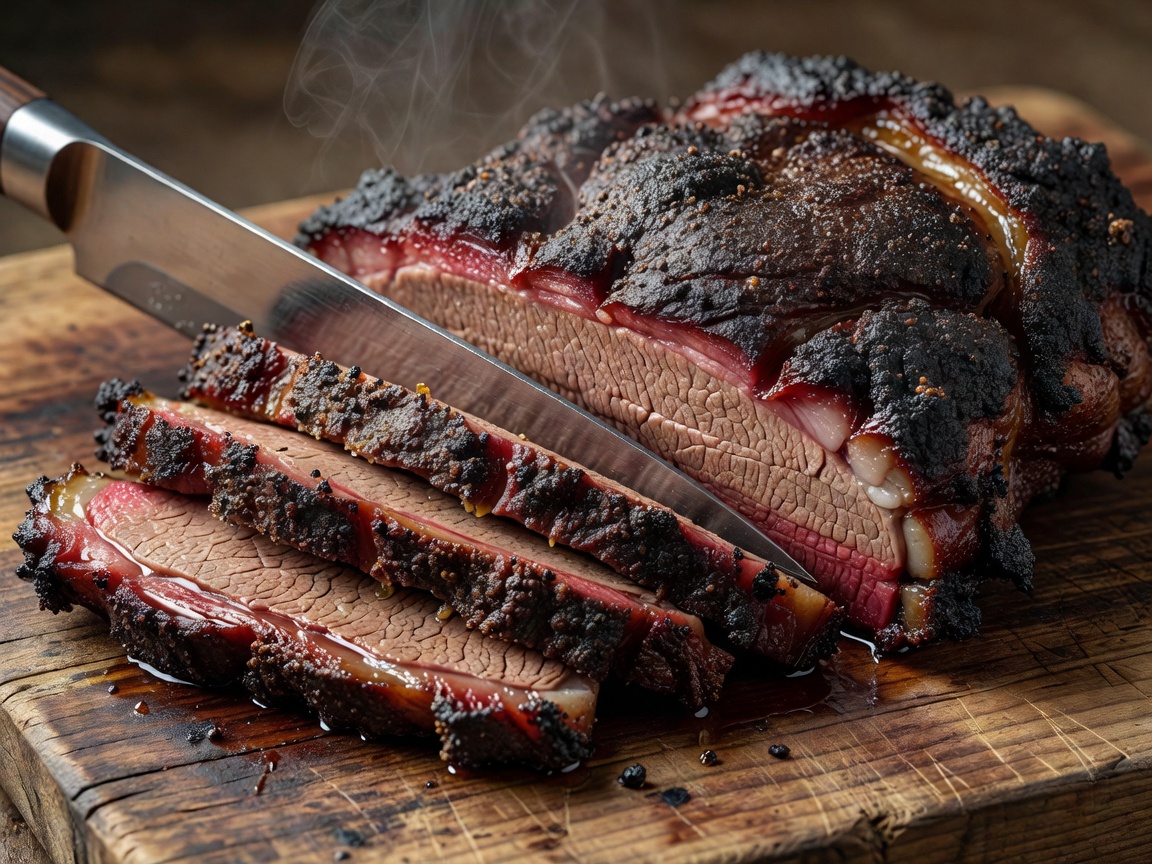
True barbecue is defined by patience. Smoking a large, tough cut of meat until it becomes melt-in-your-mouth tender requires mastering a delicate balance of time, temperature, and smoke. The reward for this patience is the "bark"—the dark, crusty, flavor-packed exterior that forms during a long smoke.
Whether you are using a kettle grill, a water smoker, or a large offset stick-burner, the underlying physics remain the same. Here are the core techniques you must master.
Fire Management: The Minion and Snake Methods
If you're using charcoal, you cannot simply dump a pile of lit coals into your smoker. They will burn too hot, run out of fuel quickly, and ruin your meat. Instead, you need a controlled, slow burn.
- The Minion Method: Ideal for upright drum smokers and water smokers. You fill the firebox with unlit charcoal and wood chunks, then pour a small amount of fully lit coals on top. The lit coals slowly ignite the unlit ones beneath them, burning slowly downward over 10-14 hours without requiring refuelling.
- The Snake Method: Perfect for kettle grills. You line unlit briquettes around the outer edge of the grill in a semi-circle (the "snake"), two rows wide and two rows high, placing wood chunks along the first half. Light one end, and the fire slowly burns around the ring, maintaining a steady 225°F for up to 12 hours.
Understanding "The Stall"
Every novice pitmaster panics during their first brisket or pork shoulder cook. Around 160°F internal temperature, the meat stops cooking. The temperature plateaus—and sometimes even drops—for hours. This is known as "The Stall."
The stall is caused by evaporative cooling. As the muscle fibers tighten, they squeeze moisture out to the surface of the meat. This moisture evaporates, cooling the meat at the exact same rate the fire is trying to heat it. You have two choices:
- Wait it out: Keep the temperature steady and wait for the surface moisture to dry out. This yields the thickest, crunchiest bark but takes hours longer.
- The Texas Crutch: Wrap the meat tightly in butcher paper or heavy-duty aluminum foil once it hits 160°F. This traps the moisture, completely bypassing the stall, and significantly speeds up cooking time. The trade-off is a slightly softer bark.
Blue Smoke vs. White Smoke
Not all smoke is good smoke. If thick, billowing white clouds are pouring out of your smoker, your fire is smoldering, lacking oxygen. This produces creosote, an oily compound that makes meat taste bitter and makes your lips numb.
You are looking for "thin blue smoke." It should be barely visible, wafting gently from the exhaust vent. This indicates complete, clean combustion. Thin blue smoke imparts a sweet, rich wood flavor without overwhelming the meat.
Resting the Meat
Taking a brisket off the smoker at 203°F and slicing it immediately is a critical error. At high temperatures, the liquid fat and rendered collagen are highly fluid. If you cut into it, those juices pour out onto the cutting board, leaving the meat dry.
Large cuts must rest. Wrapping them in towels and placing them in an insulated cooler (without ice) allows the internal temperature to slowly come down. The muscle fibers relax, and the viscous rendered fats redistribute and thicken. A minimum rest of two hours is recommended; many professional pitmasters rest briskets for twelve hours in holding ovens.